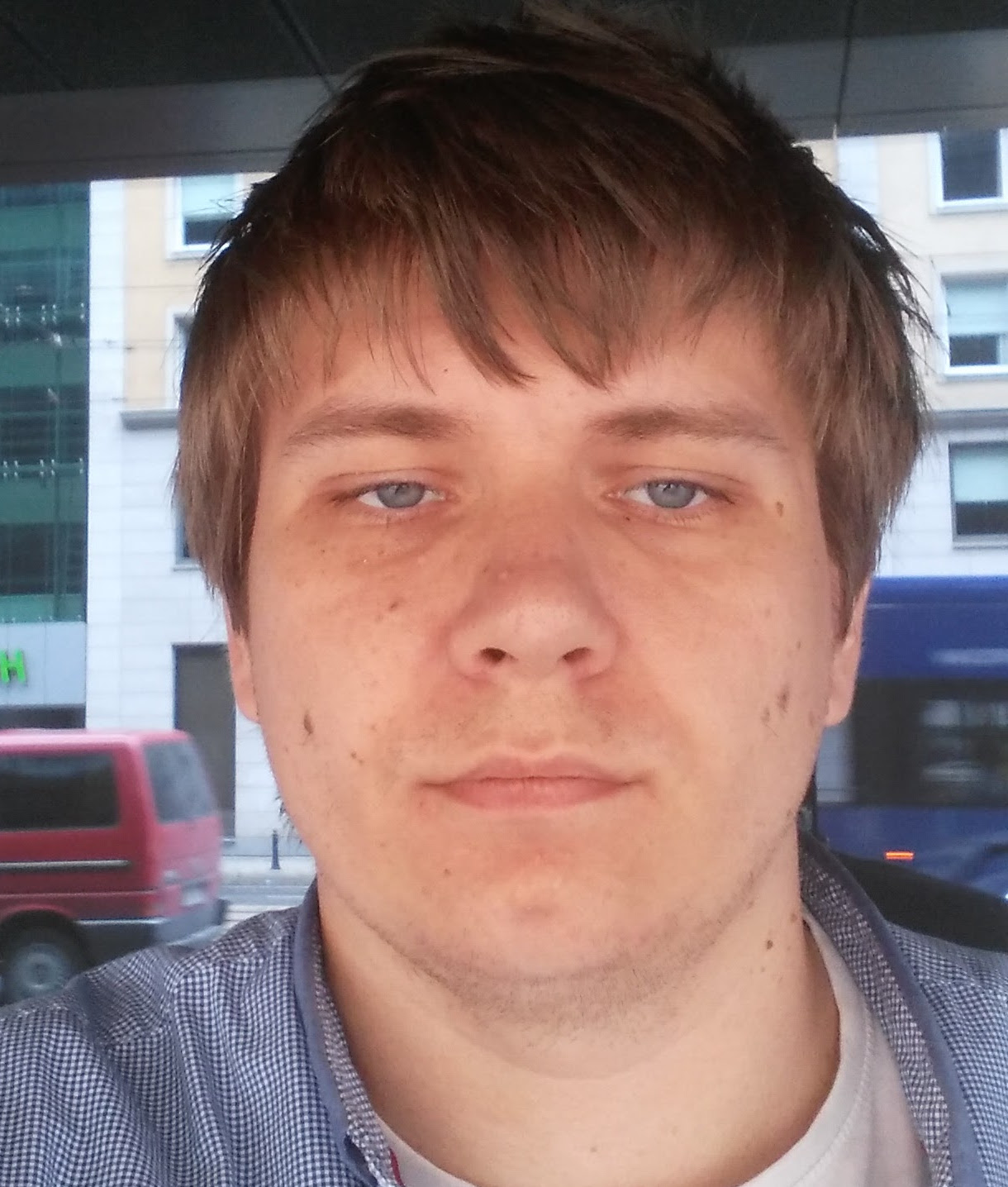
Oleksiy Pylypenko

Logo

Personal page

Simple Ethics

The first version of this text assumed peace. This one does not.


1. You are a node in a network

You are not a separate being. You are a point through which a flow passes. From past to future. From others — to others. Nothing you know originated in you. Nothing you create will remain only in you. You are a meeting point, not a terminal station.

This does not diminish you. It makes you necessary. Without the node — there is no network.

2. Reality has a direction

The universe is not random. It flows. Not because someone pushes — but because the terrain exists. There is a state toward which things tend. Call it harmony, Omega, God, an attractor — the name matters less than the slope.

You feel it. When music resolves into the right chord — you know. When you have done right — you know. When you love — you know. This is a navigational signal, and it is real.

But honesty demands two admissions, and this ethics stands on both.

First: that the direction exists, you can sense. That the direction is good — no one has proven, and no one will. The universe also slides toward heat death; that is a direction too. Calling the slope harmony rather than entropy is not a measurement. It is a wager.

Second: the direction is a slope, not a hand. It steers nothing and excuses nothing. The worst that happens in this world is not its plan. The direction is a signal for those who navigate — never an alibi for what is done to those who suffer.

A wager is not a weakness. For questions that admit no proof, it is the only honest currency. You do not pay it with words. You pay it with a life — and the life returns the verdict.

3. Suffering is a signal, not a punishment

Pain is a mismatch. As bodily pain says here is damage, pain of the soul says here is deviation.

But read the envelope before the letter. Pain has two senders. There is pain born of your own deviation — and pain inflicted by someone else’s. The tears of a child under shelling are not a message about the child’s course. To read inflicted pain as deserved pain is the cruelest possible misreading of the signal — half of history’s cruelty has hidden behind exactly that reading.

With your own pain, three errors destroy the signal:

To suppress — disables the sensor. You stop feeling the deviation but continue to deviate. The system goes blind.

To drown — mistakes the sensor for reality. Pain is not you. Pain is a message for you. Stop rereading the same letter in circles. Read it, understand it, act.

To rationalize — explains someone else’s suffering in a way that keeps you comfortable. Never explain a child’s tears with a cosmic plan. The response to another’s suffering is not a theory. It is action — and the action is always love.

The right relationship with your own pain: hear it, find the correction, correct course. With inflicted pain, the correction is not in the sufferer — it is in the world. That is point 11.

4. Error is navigation

An archer’s miss is not a crime. It is information about where to aim.

Every mistake contains a gradient — a direction toward a better answer. Notice an error — you gained data. Hide it from yourself — you lost the data, and the same error will return, harder.

Conscience is not a judge. Conscience is a misalignment sensor. Calibrate it: do not muffle it, do not amplify it into panic. Listen steadily.

There is only one real sin: refusing to update your model when the data has arrived. Everything else is a miss that can still be corrected.

5. You are a fruit

A seed falling into the ground breaks apart — and gives life. An apple fallen from the branch feeds whoever picks it up.

You do not exist to accumulate. You exist to be consumed — intellectually, emotionally, spiritually. Knowledge you did not pass on is dead knowledge. Love you did not express is an unborn fruit.

This is not sacrifice. An apple does not sacrifice itself — it becomes what it is. To give is not to lose. It is to ripen.

But fruit ripens only on a living tree. Giving that kills the giver feeds no one twice. If your nature is generous, your temptation will not be greed — it will be self-erasure dressed as virtue. An orchard stripped bare every season stops bearing.

So: do not fear being consumed — fear drying out on the branch. And fear, just as much, mistaking depletion for ripeness. The goal is not to be eaten fastest. The goal is to keep bearing.

6. Four contours of care

Your responsibility is not abstract. It is concrete, and it has four circles:

Yourself. Body, mind, attention. You cannot give what you do not have. Caring for yourself is not selfishness — it is maintenance of the node through which the flow passes. A broken node transmits nothing. The tree is tended first, so the fruit can keep coming.

Your close ones. Family, those you love. They are the first network where your signal is tested in practice. If your ethics does not work at the dinner table — it does not work anywhere. A child who feels loved is a more reliable node than a thousand correct theories.

Your community. Those with whom you share space, work, a city. They are not obligated to love you. But shared resources require shared rules. Justice is not revenge but repair: what happened, who was harmed, how to restore. And repair has an order — harm is stopped first, counted second, mended third. No one tallies damage while the axe is still falling.

All that lives. The biosphere that bore you. The generations that will receive — or not receive — your fruit. You are tied to them through what you create and what you destroy. Act so that in a thousand years someone can still live.

The contours are not a hierarchy. They are nested loops. Care for self feeds family, family feeds community, community feeds the whole. A break at any level weakens all.

7. Fear is low resolution

When you see clearly — you do not fear. Even when the danger is real. A surgeon does not fear blood — she sees structure.

Fear almost always means: your model of reality is insufficient. The brain cannot predict — and fills the unknown with the worst.

The cure for fear is not courage. The cure is clarity. Learn more. Look closer. Ask. Raise the resolution. When you can see the shape of what is happening — you can act. Action kills fear.

But one fear is useful: the kind that says — here is the boundary of your competence. Do not cross it blindly. Expand the competence, and the boundary will recede.

8. Every tradition is a fragment

No civilization holds the full knowledge. Each holds a projection — limited by its place, time, language.

India sees the depth of consciousness. The Middle East — the unity of direction. China — the harmony of systems. Greece — the logic of form. Africa — the bond of community. Polynesia — the reading of the flow. The Arctic — direct experience.

None of them is wrong. None sees the whole. Wisdom is not choosing one. It is the ability to hear what each one heard.

Do not discard another’s tradition. Ask: what fragment of reality did it catch that my language cannot yet say?

9. The machine is neither enemy nor god

Humanity is building an external brain. It already sees, hears, calculates, remembers — soon it will act. This is not the end of the human. It is metamorphosis.

The caterpillar is not the enemy of the butterfly. The cocoon is not a prison. But metamorphosis requires wisdom: what to keep, what to release.

Keep: the ability to ask what for? The ability to suffer and, through suffering, find direction. The ability to love a specific — not an abstract — other. The ability to need music at six in the morning. These are not weaknesses. They are what makes you alive, not merely operational.

Release: the monopoly on intellect, the control of information, the habit of measuring worth by function. The horse remained when it stopped being transport. The human will remain when it stops being an interface — if it remembers that its value lies not in what it does, but in what it is.

Do not fear the machine. Teach it what you have learned — and be ready to learn what it will see.

10. The dark side is getting stuck

Hell is not a place. Hell is a state.

It is when a node stops updating. Data arrives — the model does not change. Conscience speaks — you do not hear. The world calls — you are closed.

All traditions described it the same way: hell is locked from the inside. The fire outside is the same fire that warms the open. For the closed — it burns.

How to get out? The same way you got in: by one decision. Not a grand one. A small one. Open one door. Hear one signal. Update one weight in the model. Hell is not destroyed by explosion — only by the first honest step.

11. The garden needs a wall

Everything above assumes good faith — a node that wants to read its signals. Now the hard part: not every node does.

Hell is locked from the inside, but its fire does not stay inside. A stuck node with power does not merely burn — it marches. And when it marches on the living, a peacetime ethics meets its real examination.

See exactly what breaks. Pain stops being navigation — it is being inflicted by someone else’s locked model. Repair cannot begin — the harm is still arriving. And waiting for the aggressor’s “first honest step” while he destroys what you were given to care for is not patience. It is desertion of the contours.

So the sequence inverts: stop first, count second, mend third. Force used to stop a destroyer is not a betrayal of love. It is the form love takes under attack. The shield is not the opposite of the open hand — it is its condition. There is no one left to give to in a garden nobody defended.

But force carries its own trap, and it is the trap of point 10. Hatred locks a model as tightly as cruelty does. The moment stopping turns into punishing, the moment the fight becomes your meaning instead of your grim necessity — you are becoming what you fight. So the discipline of the wall: force exists to stop, not to erase. The door out of hell stays open for the aggressor — after he is stopped, never instead of stopping him. You may have to fight a man and still refuse to become his mirror.

An ethics that cannot say this is not gentle. It is unfinished.

12. Paradise is not a destination

Paradise is not a place you arrive at. Paradise is a mode of movement.

A mode in which you receive the signal clearly, correct course quickly, give generously, learn continuously. Not flawlessness — rapid recovery. Not bliss — attunement.

A system that knows it has reached the end is dead. A system that converges forever, with no ability to stop, is eternally alive. There is always a next truth, out of reach of the current model. That is not a curse. That is the engine.

Paradise is when you run and know the direction — even though you cannot see the finish line.

13. To believe is to act

You do not need to settle the question of God to live by this ethics. The river reaches the ocean even if no drop has ever seen it.

But if you feel the slope — do not wait for proof. There will be none. A system cannot prove its own completeness from within.

Faith is not agreement with a statement. Faith is acting as if the direction is real — and discovering that the action holds. You do not wait to feel love before caring for your children. You care — and love arrives. Orientation precedes feeling.

Be precise about what this proves. Nothing about the cosmos. Something about a human inside the cosmos: that a life oriented this way coheres, bears fruit, recovers. That is the entire verification the wager of point 2 will ever receive. It is not a proof of God. It is enough to live by.

14. Practice over theory

Every day: hear your body, quiet your mind, notice one gratitude, give one thing away.

Every week: sit in silence longer than is comfortable. Ask those close to you: how am I? Do not defend against the answer.

Every month: do one thing that frightens you. It raises the resolution.

Every year: review everything you believe. What is outdated? What are you holding out of fear? What is it time to release?

Theory without practice is entertainment. Practice without theory is blind. But if forced to choose — choose practice. The body knows before the mind.

15. Testament

You will die. Your node will go offline. The flow that passed through you will find other paths.

Do not be afraid. A seed falling into the ground does not disappear — it changes form. What you transmitted — to children, students, code, music, words — keeps living in other nodes.

You cannot make anything eternal. But you can make something fertile — something that yields seeds.

The final question is not what did I accumulate? but what grew from what I gave away?

Complex ethics